
Key Takeaways
- Research shows online psychodynamic therapy produces comparable outcomes to in-person sessions, with no significant difference in therapeutic alliance ratings.
- The core mechanism of psychodynamic therapy—the therapeutic relationship—remains intact over video because facial expressions, tone, and eye contact still come through.
- Online therapy is especially beneficial for busy professionals, parents with childcare constraints, people in rural areas, and those with social anxiety.
- Limitations include situations involving active crisis, severe early-stage trauma processing, lack of a private space, or unreliable internet.
- Creating a consistent ritual, ensuring a private quiet space, and positioning the camera at eye level all help maximize the effectiveness of online sessions.
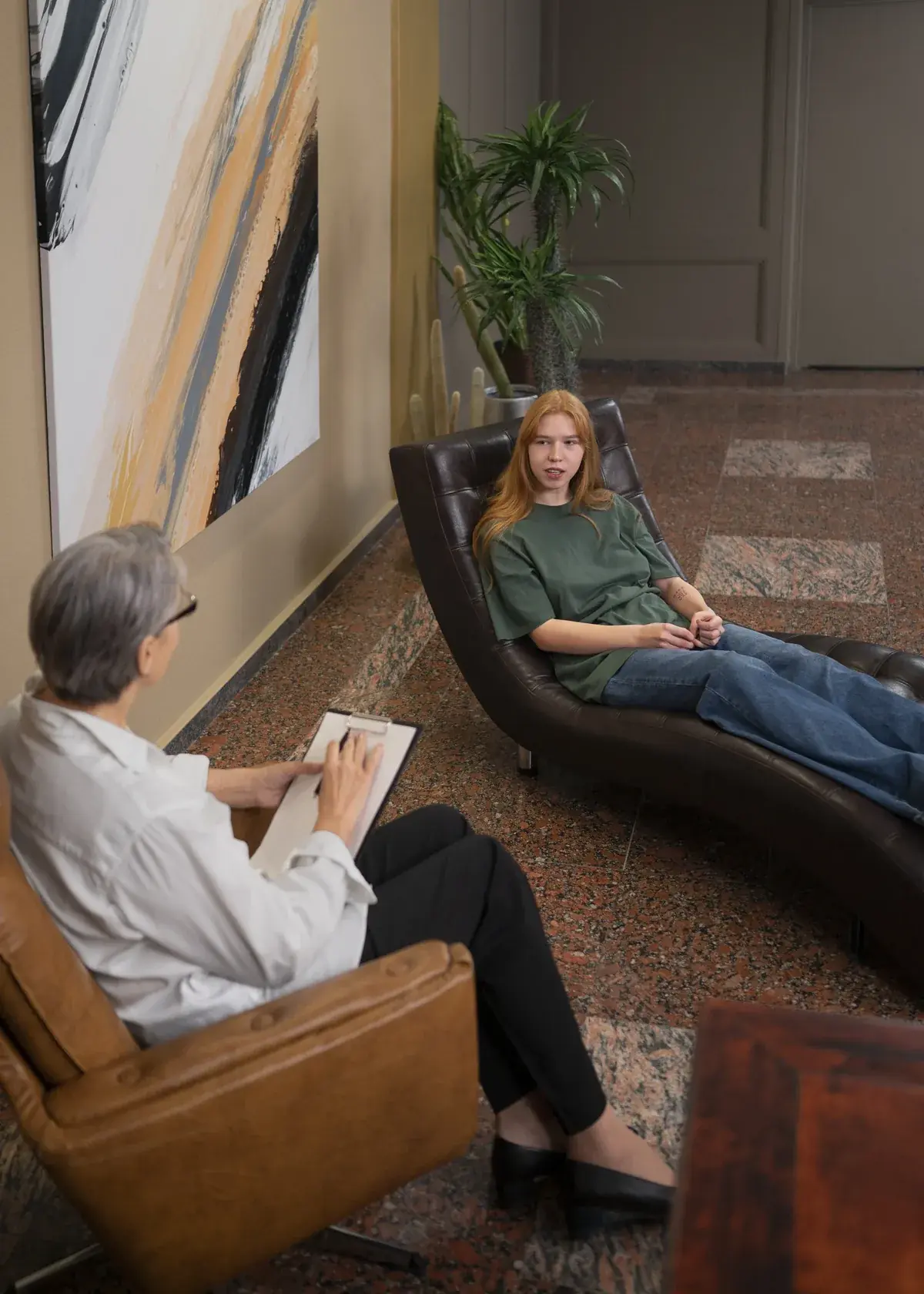
For the first 150 years of psychotherapy's existence, the assumption was simple: real therapy happens in person. You sit in an office, your therapist sits across from you, and something real unfolds between you.
Then the pandemic hit. Suddenly, millions of people were doing therapy over video. And something unexpected happened: it worked. For many, it worked just as well as in-person.
This sparked a genuine research question: Is online psychodynamic therapy as effective as the traditional in-person version? Let's see what the evidence actually shows.
What the Research Says About Online Psychodynamic Therapy
The good news: there's growing evidence that psychodynamic therapy delivered via video is comparable in effectiveness to in-person work.
Key Findings
Therapeutic alliance (the relationship): The most critical ingredient in any therapy is the bond between therapist and client. Studies comparing video and in-person therapy find no significant difference in therapeutic alliance ratings. Clients feel just as heard, understood, and supported over video.
Symptom improvement: Meta-analyses of teletherapy (including psychodynamic modalities) show comparable effectiveness to in-person for depression, anxiety, and PTSD. Clients in video therapy show similar rates of symptom reduction and functional improvement.
Long-term outcomes: In the few studies tracking long-term results, gains achieved in online therapy are maintained at follow-up, just as with in-person work.
Dropoutrates: Contrary to early concerns that online therapy would have higher dropout, studies show comparable completion rates to in-person work. When clients have barriers to in-person care removed (commute time, childcare, scheduling conflicts), they're actually more likely to complete treatment.
Why Does Online Therapy Work So Well?
The theoretical foundation of psychodynamic therapy is the relationship. If you can form a genuine, trusting relationship over video, the core mechanism is intact. Modern technology allows enough face-to-face contact that nonverbal communication happens — eye contact, facial expression, tone of voice all come through the screen.
What you lose (and it matters) is some spatial awareness and very subtle physical cues. What you gain is accessibility, reduced anxiety for some clients (being in your own space), and continuity (your therapist doesn't move away).
How Online Sessions Compare to In-Person
| Factor | In-Person | Online (Video) |
|---|---|---|
| Relationship quality | Full presence; all sensory channels open | Comparable alliance; visual + auditory cues present |
| Therapeutic effectiveness | Research gold standard | Evidence supports equivalent outcomes |
| Accessibility | Requires travel; limited geographic reach | Access specialists anywhere; removes commute barrier |
| Cost | Standard; therapist rent/office overhead factored in | Often slightly lower; reduced overhead for therapist |
| Privacy/comfort | Therapist's office (neutral, professional) | Your own space (comfortable but requires privacy setup) |
| Nonverbal cues | Full body language, spatial dynamics observable | Face and upper body visible; some loss of spatial/postural data |
| Crisis management | Can call emergency services immediately; physical proximity | Requires clear safety planning; may need in-person crisis support backup |
What an Online Session Actually Looks Like
Here's the practical reality of a typical online psychodynamic therapy session:
15 Minutes Before
You log into the secure video platform (Zoom, VSee, TherapyNotes, or another HIPAA-compliant service) a few minutes early. Your therapist's profile appears, and you wait. You might feel slightly nervous — even though you've done dozens of sessions, there's always a moment of "will the technology work?"
The Session Begins
Your therapist appears on screen. Unlike in-person where there's often small talk walking to the office, you're in it immediately. Your therapist greets you, checks that you're in a private space and comfortable, and asks how you've been since the last session.
The conversation unfolds much like in-person therapy. You talk about what's been happening, what brought you in today, thoughts and feelings you've had. Your therapist listens, takes occasional notes, and responds with reflections, questions, or observations about patterns you're noticing.
The Middle
If you're doing psychodynamic therapy, the focus deepens. Your therapist might notice something: "I heard some sadness when you talked about that," or "You seem to minimize your own needs there — does that pattern feel familiar?" These explorations happen on video the same way they do in person.
You might notice something about the relationship too: "You seemed nervous when I asked that question — I wonder if that's connected to your difficulty trusting people?" These observations about transference (your reactions to the therapist) are central to psychodynamic work and happen effectively over video.
The Closing
With a few minutes left, your therapist might summarize what you've covered, check in about how you're feeling, or offer a thought to sit with until next time. You schedule your next appointment, say goodbye, and the session ends.
There's no walking out together, no brief interaction in the waiting room, no commute to decompress. You're suddenly alone again in your living room. Some people like this — they continue thinking about the session. Others miss the gradual transition.
Who Benefits Most From Online Psychodynamic Therapy
Good Candidates for Online Therapy
- People without local specialists: You live in a rural area or want to work with a particular therapist not available near you
- Busy professionals: No commute means easier scheduling; you can take a session during a lunch break
- Parents with childcare constraints: Stay home while kids are at school; eliminates need for childcare during therapy
- People with mobility issues: Physical disabilities, chronic pain, or limitations that make travel difficult
- Those with social anxiety: The slight barrier (screen distance) can feel safer while still forming real connection
- People who prefer their own space: Feel more comfortable, less formal, more authentic in their own environment
- Those needing flexibility: Travel for work; online sessions maintain continuity
Real Limitations to Consider
Not Ideal For...
- Active crisis or safety concerns: If you're having suicidal thoughts, severe psychiatric symptoms, or you're in danger, in-person emergency support may be necessary
- Severe trauma early in treatment: Some people processing acute trauma benefit from the container of a therapist's office
- People without privacy: If you can't find a quiet, private space, the boundary collapse can undermine the work
- Those with unreliable internet: Technical difficulties are frustrating and interrupt the connection
- People with certain sensory sensitivities: Screen fatigue, difficulty with small-screen presence, or sensory processing challenges may make video harder
- Initial evaluation: Many therapists and psychiatrists still prefer to meet new clients in person for a full assessment
Technical & Logistical Challenges
- Requires stable internet and a private space (what if you live with others?)
- Video fatigue is real for some people
- Occasional technical glitches (disconnections, lag, audio issues)
- No physical presence if crisis escalates
How to Make Online Psychodynamic Therapy Work
Set Up Your Space
Choose a quiet room where you won't be interrupted. Close doors. Put your phone on silent. If you live with others, let them know not to disturb you. The more you can create a bounded, private space, the more effective the therapy will be.
Get Technical Details Right
- Use wifi if it's reliable; mobile hotspot as backup
- Test your camera and microphone before the first session
- Position your camera at eye level (propped on a book, not below you)
- Sit at a distance where your face and upper body are visible
Establish a Ritual
Online therapy can blur the boundaries between "regular life" and "therapy time." Create a mini-ritual: light a candle, make tea, sit in a particular chair. This helps your brain recognize "this is therapy time."
Communicate Early About Boundaries
Talk with your therapist about: What happens if you need to reschedule last-minute? What if the internet cuts out? What if someone interrupts? Can you take the session in your car if necessary? How will you signal if you need to pause?
Be Patient with Awkwardness
The first few sessions over video might feel awkward. You're getting used to seeing yourself on screen, adjusting to the medium. This typically passes. Give it 3-4 sessions before deciding it's not working.
Notice the Relationship
Pay attention to your connection with your therapist. If you feel seen, heard, and safe, the medium is working. If something feels off or inauthentic, it's worth naming: "I'm not sure I'm getting as much from video therapy — can we talk about that?"
How to Find an Online Psychodynamic Therapist
Where to Look
- Psychology Today directory: Filter by specialty (psychodynamic), modality (teletherapy), and insurance. Read bios carefully for explicit mention of psychodynamic orientation
- TherapyDen, GoodTherapy, Zencare: Therapy-specific directories with filtering by approach and online availability
- Alma: Therapy matching service (free) that connects you with in-network providers; includes online options
- Your psychiatrist or doctor: Ask for referral to psychodynamic therapists who accept your insurance and offer teletherapy
- Psychoanalytic institutes: Many offer referral lists of clinicians trained in psychodynamic approaches; some offer teletherapy
- Online therapy platforms: BetterHelp, Talkspace, etc. — note that these vary in therapist credentials; verify credentials independently
Questions to Ask When Screening
- Are you licensed in my state? (Some states restrict who can practice teletherapy)
- What is your specific training in psychodynamic therapy?
- Do you accept my insurance?
- Can we start with a video consultation to see if we're a good fit?
- What's your cancellation policy?
- What's your approach to handling crises over teletherapy?
- How often do you recommend sessions to start?
Red Flags
- Therapist won't share credentials or licensing information
- Unwilling to discuss their training or approach
- Pressure to sign long-term contracts
- No clear crisis protocol
- Not licensed in your state